

MBHB Summer Associate Walter DeGroft co-authored this article.
The European Union (EU) has recently reformed its design protection framework, attempting to make it simpler, more unified, and ready for the digital age.[1] Previously, Aladdin could protect his magic carpet design in the EU in several ways, including the surface ornamentation of the carpet design, the carpet’s three-dimensional appearance (through a series of two-dimensional drawings), as well as an animated carpet appearance (through a limited series of up to seven still images). Now, Aladdin has additional ways to protect the “movement, transition or any other sort of animation” of his carpet, including as a dynamic or animated design.[2] For EU designs filed at the European Union Intellectual Property Office (EUIPO), the changes rolled out in two separate phases, which are both now fully in effect. This Snippet will summarize the main changes and provide several examples of new dynamic and animated designs. For applicants filing in the EU, these changes provide new ways to protect modern designs and greater clarity regarding the available protection.
Changes in force since May 1, 2025
| Area | Changes |
| Terminology | EU Community Design Regulation becomes the EU Design Regulation (EUDR);Community Designs become EU Designs and, as such, Registered Community Designs (RCDs) become Registered EU designs (REUDs).[3] |
| Design definition | Protectable designs now explicitly include animation, movements, and transitions.[4] |
| Product definition | The product definition has now been expanded to expressly encompass non-physical items, clarifying that a design need not be embodied in a physical object to qualify for protection. The revised definition explicitly identifies graphical user interfaces, logos, graphic works, surface patterns, and spatial arrangements of items as protectable subject matter.[5] Although many such designs were already protectable under the previous regime, these amendments provide greater statutory clarity and legal certainty. |
| Protection Techniques | Designs may now be protected in new ways, including via dynamic or animated representations and via 3D and video files. |
| Filing Location | All applications for EU designs must be filed with the EUIPO—there is no longer a national-office route.[6] |
| Filing Date | A fee is now required to get a filing date.[7] |
| Multiple applications | Unity of class abolished, allowing for multiple classes of designs in a single application, with a limit of 50 designs per application.[8] |
| Fees | There is now one single application fee for both registration and publication.[9] Additionally, a flat fee system for additional designs has been implemented with a €125 flat fee per additional design.[10] |
| Renewals | Renewal fees have increased. Renewal fees are due on the exact day of expiration with a six-month grace period.[11] |
| Rights | Design rightsholders may now prohibit people from creating, downloading, copying, and sharing or distributing digital files of their design, such as 3D-printing files.[12] |
| Limitations | There are new limitations on when design rightsholders may enforce their design rights, including: identifying or referencing a product, commentary, critique, and parody.[13] |
| Design notice | Owners of REUDs may opt to use a Ⓓ symbol on their designs, also accompanied by registration numbers and hyperlinks to the entry of their design.[14] |
| Repair clause | Must-match spare parts used solely to restore a complex product’s original appearance are unprotected, provided consumers are told the part’s origin and maker.[15] |
| Ownership | With a final national entitlement ruling, a rightful design owner can take over a fraudulent registration rather than invalidating it first.[16] |
| Deferment | Failing to pay the deferment fee, after the two-month cure period, leads to refusal of the application.[17] At the end of the deferment period (max 30 months), the design is now automatically published.[18] To prevent publication, the holder must surrender the design at least three months before the period expires.[19] |
| Scope | Protection is limited to features visibly shown in the application regardless of whether they are visible in use.[20] |
| Enforcement | Design holders may now block counterfeit goods in transit through the EU, unless the goods can lawfully be sold in their country of final destination.[21] |
Changes in force since July 1, 2026
| Area | Change |
| Representation | Designs may now be represented by dynamic or animated representations using 3D and video.[22] Applicants may include up to 10 static views (an increase from the previous seven) to support presentation of the subject matter.[23] There is no longer a neutral background requirement. Visual disclaimers may be submitted to identify where protection is not sought.[24] |
| Communication | All communications with the EUIPO, both to and from the EUIPO, must now be electronic.[25] |
| Refusal grounds | The EUIPO may now refuse designs that improperly use Article 6ter of the Paris Convention emblems, or symbols of specific public interest in a Member State, unless the competent authorities consent.[26] Previously, these were only grounds for invalidity after registration. |
| Invalidity | Invalidity applications must now meet filing requirements specific to each ground.[27] Applicants may substantiate earlier rights by pointing to a recognized online source instead of filing copies.[28] Where the parties agree to change the language of proceedings, the application only needs to be translated if the design rightsholder asks for it.[29] |
| Priority examination | Uncontested invalidity actions for lack of novelty or individual character (Art. 27(1)(b), with Arts. 6 and/or 7) are now fast-tracked, helping clear copycat registrations the EUIPO never examined for novelty.[30] |
Renewal fees: old vs. new[31]
| Renewal | Old fee (pre-1 May 2025) | New fee | Increase |
| 1st (after 5 yrs) | €90 | €150 | +67% |
| 2nd (after 10 yrs) | €120 | €250 | +108% |
| 3rd (after 15 yrs) | €150 | €400 | +167% |
| 4th (after 20 yrs) | €180 | €700 | +289% |
| Total for full 25 years | €540 | €1,500 | +178% |
All dealings with the EUIPO are now electronic so design rightsholders without a representative must have an active EUIPO account to receive notices and track deadlines. Invalidity proceedings have also become sharper on both sides: design rightsholders relying on an earlier right may now substantiate it by pointing to a recognized online register, while design rightsholders who leave a novelty challenge uncontested will see it fast-tracked. Silence is no longer a way to buy time.
When Aladdin comes to file his REUD application for his new magic carpet design, he may consider presenting a dynamic or animated presentation using one of the new methods of protection shown below. Doing so may help him more closely protect the actual visual appearance of the design—see, for example, the hair slide and building façade examples below, the moving aspects of which would be difficult, if not impossible, to protect under the old regime. Before filing, he may wish to consult with a trusted design advisor or grand design vizier (hopefully not one as nefarious as Jafar) to determine an appropriate scope of protection. From a strategic point of view, it often makes sense to disclaim portions of the design that are seen as less important.
| Design Type and (Product Indication) | REUD Number and Hyperlink | Example Static Image |
| Dynamic (3D) (Candle Accessory) |
015153874-0002 | 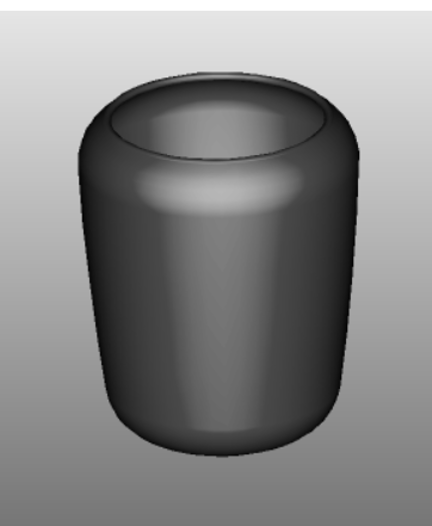 |
| Animated Character | 015154777-0001 | 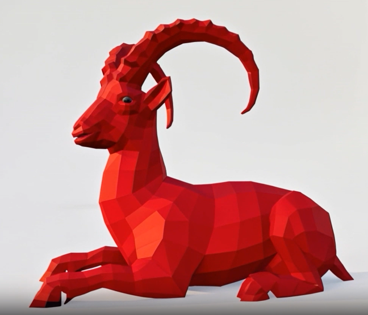 |
| Animated GUI | 015152934-0005 | 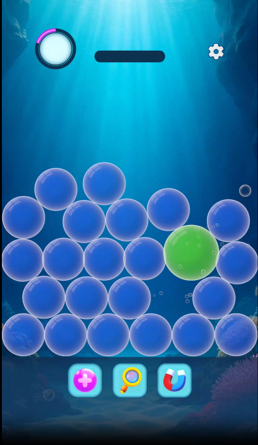 |
| Animated Icon (Icon) |
015146672-0008 |  |
| Moveable Object (Hair Slide) |
015153503-0003 | 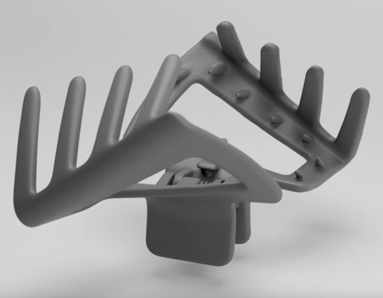 |
| Moving Object (Building Façade) |
015154204-0002 | 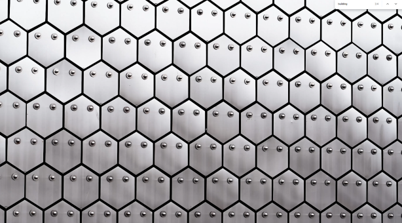 |
| Modifiable Clothing (Raincoat) |
015146984-0001 | 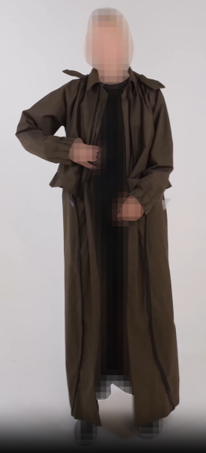 |
Finally, even though the EU design reform is complete at the EU level, there is a final national stage implementation. EU Member States must transpose the Recast Directive into national law by December 9, 2027.
[1] Eur. Union Intell. Prop. Off., The Modernised EU Design Legal Framework Is Now Fully Applicable (July 1, 2026), https://www.euipo.europa.eu/en/news/the-modernised-eu-design-legal-framework-is-now-fully-applicable.
[2] Art. 4(1), Regulation (EU) 2026/715.
[3] Eur. Union Intell. Prop. Off., The Modernised EU Design Legal Framework Is Now Fully Applicable (July 1, 2026), https://www.euipo.europa.eu/en/news/the-modernised-eu-design-legal-framework-is-now-fully-applicable.
[4] Art. 4(2)(b), Regulation (EU) 2026/715.
[5] Art. 4(2), Regulation (EU) 2026/715.
[6] Art. 41(1), Regulation (EU) 2026/715.
[7] Art. 46, Regulation (EU) 2026/715.
[8] Art. 44, Regulation (EU) 2026/715; See also Art. 48, Regulation (EU) 2026/715.
[9] Art. 42(4), Regulation (EU) 2026/715.
[10] Art. 44(2), Regulation (EU) 2026/715.
[11] Art. 66(3), Regulation (EU) 2026/715; See also Renewal Fees Table.
[12] Art. 20(2)(d), Regulation (EU) 2026/715.
[13] Art. 21, Regulation (EU) 2026/715.
[14] Art. 29, Regulation (EU) 2026/715.
[15] Art. 22, Regulation (EU) 2026/715.
[16] Art. 15, Regulation (EU) 2026/715.
[17] Art. 55, Regulation (EU) 2026/715.
[18] Art. 62, Regulation (EU) 2026/715.
[19] Arts. 62 & 71, Regulation (EU) 2026/715.
[20] Art. 19, Regulation (EU) 2026/715.
[21] Art. 20(3), Regulation (EU) 2026/715.
[22] Commission Implementing Regulation (EU) 2026/138, art. 2(1), 2026 O.J. (L 138).
[23] Commission Implementing Regulation (EU) 2026/138, art. 2(1), 2026 O.J. (L 138).
[24] Commission Implementing Regulation (EU) 2026/138, art. 2(3), 2026 O.J. (L 138).
[25] Arts. 85 & 88, Regulation (EU) 2026/715.
[26] Art. 56 Regulation (EU) 2026/715.
[27] Del. Reg. (EU) 2026/137, art. 2(1)-(2).
[28] Del. Reg. (EU) 2026/137, art. 2(3).
[29] Del. Reg. (EU) 2026/137, art. 3.
[30] Del. Reg. (EU) 2026/137, art. 7 & recital 6.
[31] Regulation 2026/715, of the European Parliament and of the Council of 11 March 2026 on European Union Designs (Codification), annex I, ¶ 6, 2026 O.J. (L 2026/715).