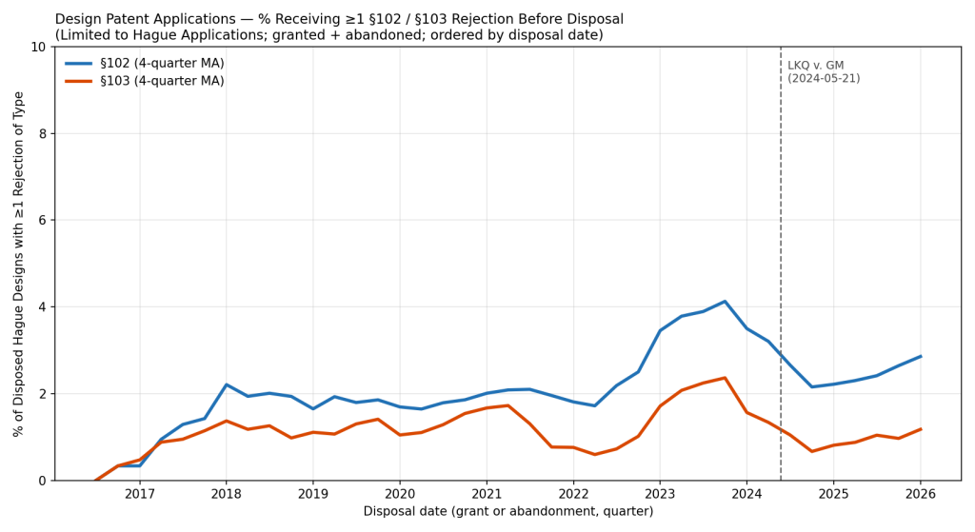

As I put pen to paper to begin writing this Snippet, we are exactly 800 days on from May 21, 2024, when an en banc United States Court of Appeals for the Federal Circuit decided LKQ Corporation v. GM Global Tech. Operations LLC. Before that case was decided, many design law enthusiasts—a merry group to which I belong—had thought that the case might upend design law, rendering a vast number of existing and future design rights potentially invalid as obvious. At that point in time, I had thought that casting away the existing Rosen test (aka, the Rosen–Durling test) could lead to a new framework in which an examiner or patent challenger would be allowed to freely pick and choose existing shapes from the prior art to render designs invalid due to obviousness. With every shape found somewhere in the prior art, there seemed to be a genuine risk that few—if any—new designs could be truly considered non-obvious if the Rosen test were to be overruled. In this Snippet, I will briefly explore why that did not happen, before looking at three chunks of evidence that illustrate the impact of LKQ so far.
A battleground shift from Rosen to LKQ
The Rosen test—which existed prior to May 21, 2024—relied on first finding a single primary reference that was “basically the same” as the claimed design. Once a suitable primary (or Rosen) reference had been found, it could be modified in light of one or more secondary references to render the claimed design obvious. The typical design patent obviousness battleground over which parties—including an applicant and an examiner or a patent owner and a patent challenger—would argue tended to center on whether there was a suitable primary reference. Once LKQ jettisoned the Rosen test, the battleground shifted. Even though a single primary reference must still be identified, the primary reference no longer has to be “basically the same” as the claimed design. The new battleground comes from a similar place as the Rosen test—namely, to guard against hindsight—but has shifted to be about whether “there [is] some record-supported reason (without hindsight) [at the time of the invention] that an ordinary designer in the field of the article of manufacture would have modified the primary reference with the feature(s) from the secondary reference(s) to create the same overall appearance as the claimed design.” In short, the new “LKQ test” may be considered to be: (A) identifying a primary reference, (B) identifying one or more secondary references, and (C) establishing record-supported reasons (without hindsight) why an ordinary designer in the field would have modified the primary reference with one or more features from the secondary reference(s) to create the same overall appearance as the claimed design. This LKQ test may be applied consistently with the Graham factors, as explored in the Diode Dynamics case discussed below. Indeed, there appears to be considerable overlap between the Graham factors and the LKQ test and, possibly, a need to apply the tests in conjunction with one another. The table below illustrates the overlapping nature of the tests.
| Graham Factors | LKQ Test |
| (1) consider the scope and content of the prior art | (A) identify a primary reference |
| (B) identify one or more secondary references | |
| (2) consider the differences between the prior art and the claims at issue | (C) establish record-supported reasons (without hindsight) why an ordinary designer in the field would have modified the primary reference with one or more features from the secondary reference(s) to create the same overall appearance as the claimed design |
| (3) consider the level of ordinary skill in the pertinent art | |
| (4) consider secondary considerations such as commercial success, long felt but unsolved needs, and failure of others |
Plus ça change, plus c’est la même chose. One – anecdotal evidence.
Over the past 800 days, I have not observed significant changes in the frequency of design patent obviousness rejections, and I have observed only a subtle shift in the type of design patent obviousness rejections. On the one hand, this is likely the least compelling evidence that LKQ did not flip design patent obviousness on its head—after all, it’s a relatively small sample size, with no verifiable or repeatable methodology to back it up. On the other hand, there’s something to be said for whether things feel markedly different, and they simply do not. Further, I have not spoken to any design patent practitioners who have mentioned that they have noticed large differences from the pre-LKQ environment.
In terms of the subtle shift I noted above, I have noticed two changes. First, and unsurprisingly, the language of the rejections appears to have abruptly shifted away from “basically the same” and citations to Rosen towards “design characteristics that are visually similar” and “motivation to modify” the primary prior art design. Second, it feels like certain rejections were easier under the Rosen test than under the LKQ test, and vice versa, with the approximate number of rejections overall staying in balance. For example, a claimed design is more likely to be obvious under the Rosen test than the LKQ test where a primary reference is very close to (“basically the same” as) the claimed design, but there is no motivation to modify the primary reference. Conversely, a claimed design is more likely to be obvious under the LKQ test than the Rosen test where there is no single prior art reference that is “basically the same,” but ample record-supported reasons to modify the closest prior art to create the same overall appearance as the claimed design.
Plus ça change, plus c’est la même chose. Two – case law.
While several courts have cited LKQ in the 800-plus days since it was decided, only a few federal courts and the USPTO’s Patent Trial and Appeal Board (PTAB) have so far delved into and applied the new LKQ obviousness test. These decisions offer an early look at how LKQ is being applied, as well as the role of the Graham factors in the evaluation of obviousness challenges to design patents.
Next Step Group v. Deckers Outdoor
On August 6, 2024, in what appeared to be the first decision to address design patent obviousness after LKQ, the PTAB denied institution of Next Step Group’s challenge of U.S. Design Patent No. D927,161, which was directed to design of the upper portion of certain UGG boots (Next Step Group, Inc. v. Deckers Outdoor Corp., IPR2024-00525, Paper 16 (PTAB Aug. 6, 2024)). Next Step Group had argued two grounds of anticipation and eight grounds of obviousness. In analyzing the obviousness challenges, the PTAB applied the Graham factors in view of LKQ and found that Next Step Group had not provided sufficient record-supported reasons why an ordinary designer would have been motivated to make the specific modifications needed to arrive at the claimed boot design. The PTAB also indicated that the record did not contain any arguments directed to secondary considerations.
A&A Global Imports v. Lerman Container
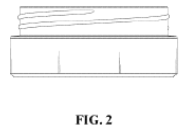
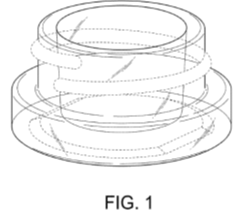
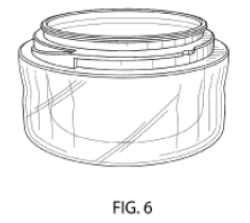
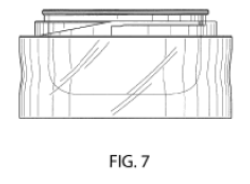
On January 22, 2025, the PTAB denied institution of inter partes review that had been sought by petitioner A&A Global Imports, Inc. (“A&A”) in its attempted challenge of U.S. Patent No. D781,151 (“the D’151 patent”), owned by Lerman Container Corp. (“Lerman”) (A&A Global Imports, Inc. v. Lerman Container Corp., IPR2024-01138, Paper 7 (PTAB Jan. 22, 2025)). A&A sought to invalidate the D’151 patent on four alleged obviousness grounds under 35 U.S.C. § 103:
| Reference(s)/Basis |
| Neutrogena, Canamasas Puigbo |
| Huang, Canamasas Puigbo, Zamberlan |
| Huang, Neutrogena |
| McKernan, Zamberlan |
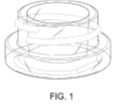
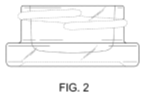
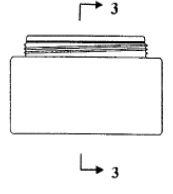
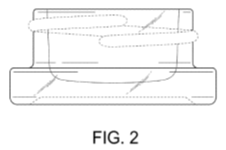
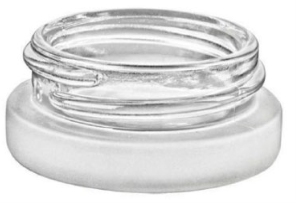
The five asserted prior art references are shown in the table below opposite images from the D’151 patent:
| Asserted Prior Art References | D’151 patent |
 Neutrogena Neutrogena |
  |
 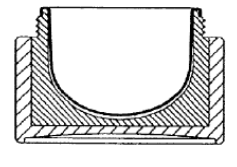 Canamasas Puigbo |
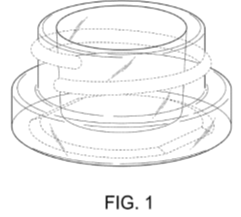 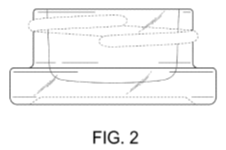 |
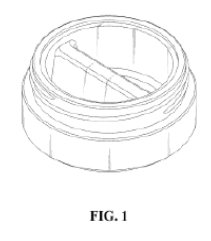  Huang |
|
  Zamberlan |
 |
 McKernan McKernan |
|
In denying the petition, the PTAB used solely the new LKQ test for obviousness, with no reference to the Graham factors (Graham itself is cited only in reference to a quote from the LKQ decision). Even though the PTAB acknowledged that LKQ has an “analogous art requirement,” the PTAB did not explicitly state whether any of the cited references met this requirement but appears to have implicitly accepted the references as analogous. The PTAB then conducted a detailed visual analysis of the four stated combinations of references and found that for each of the four asserted combinations, A&A failed to demonstrate that an ordinary designer would have been motivated to modify the primary reference to create a jar with the same overall visual appearance as the claimed jar design. As a result, the PTAB determined that A&A had not shown a reasonable likelihood that it would prevail and denied institution.
Gema USA v. First in Finishing
On March 27, 2025, the United States District Court for the Southern District of Indiana granted partial summary judgment in favor of Gema, finding that none of its five asserted design patents were invalid (including for obviousness) and that First in Finishing (“FIF”) infringed at least some of the patents (Gema USA, Inc. v. First in Finishing Inc., No. 1:22-cv-02053, D.I. 129 (S.D. Ind. Mar. 27, 2025)). The district court found that FIF offered “no reason, common sense or otherwise, why a POSA would select and combine elements of the prior art references, except ‘to create the overall effect or visual impression of the embodiment of [two of the asserted patents],’” and that it is improper hindsight to use the patents themselves to provide the alleged motivation to combine.
Arashi Vision d/b/a Insta360 v. GoPro
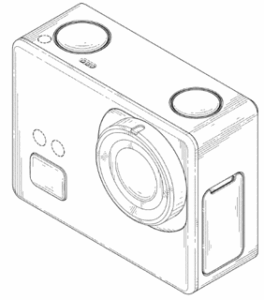
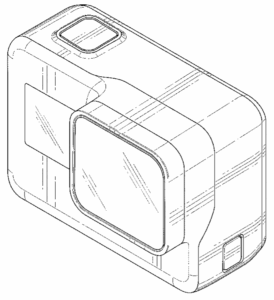
On March 31, 2025, the PTAB denied institution of inter partes review based on Insta360’s challenge of U.S. Design Patent No. D789,435 (“the D’435 patent”) directed to design for a camera (Arashi Vision (U.S.) LLC (d/b/a Insta360) v. GoPro, Inc., IPR2024-01434, Paper 9 (PTAB Mar. 31, 2025)). The PTAB applied the Graham-factors framework in view of LKQ. For one ground in which Insta360 relied on several web pages as a collective asserted “primary reference,” the PTAB found that Insta360 (a) failed to demonstrate public availability prior to the critical date and (b) improperly treated multiple web pages as a single primary reference, contrary to LKQ’s requirement that, even post-Rosen, a primary reference must be “something in existence” and not “something that might be brought into existence by selecting individual features from prior art and combining them.” For the remaining grounds, the PTAB found that Insta360 focused on certain design features while deliberately ignoring others, noting that “[t]his selective use of discrete design characteristics suggests that the analysis is driven by a hindsight reconstruction of the invention rather than the objective teachings of the references.” Insta360 failed to adequately explain why a designer of ordinary skill would modify each primary reference with any of the cited secondary references to achieve the overall visual impression of GoPro’s claimed design. An example image from two of the asserted primary references (Chen686 and Gioscia) next to an example image from GoPro’s claimed design are shown in the table below.
| Alleged Primary References | D’435 patent |
 Chen686 |
 |
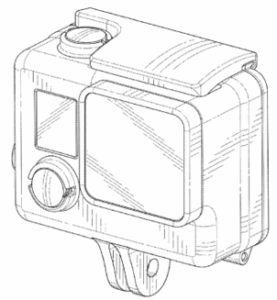 Gioscia |
|
In July 2025, in parallel litigation before the International Trade Commission, the presiding Administrative Law Judge (ALJ) similarly found that the D’435 patent was not invalid as obvious. In February 2026, the ITC affirmed the ALJ’s initial determination.
Dynamite Marketing v. Wowline
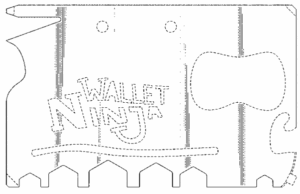
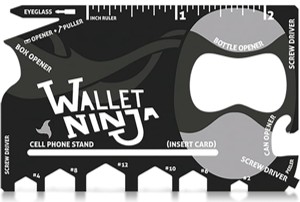
On September 15, 2025, in a non-precedential decision, the Federal Circuit addressed an appeal to the district court’s denial of the patent challenger’s post-verdict motion claiming obviousness. The patent challenger had sought review because the jury found the design patent at issue non-obvious under the prior Rosen test. The Federal Circuit held that the obviousness challenge would fail under either standard, noting that “[e]ven if [the patent challenger] had put a primary prior art reference in evidence” (it had not done so), the patent challenger had not provided “clear and convincing record-supported reasons that an ordinary designer would have been motivated to combine specific design features from identified prior references to produce the overall appearance of the patented design” (Dynamite Mktg., Inc. v. Wowline, Inc., Nos. 2024-1523, 2024-1525 (Fed. Cir. Sep. 12, 2025)). The patented design (U.S. Patent No. D751,877), and a commercial embodiment of it (the “Wallet Ninja”) are shown below.
Diode Dynamics, LLC v. 5DLight, Inc. d/b/a Lasfit
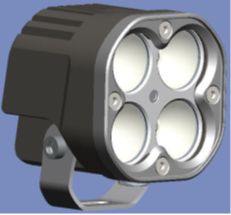
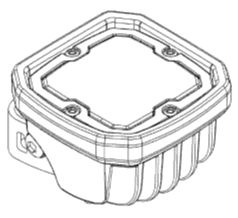
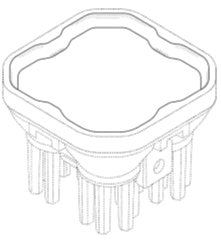
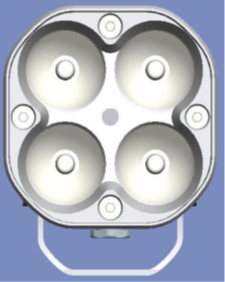
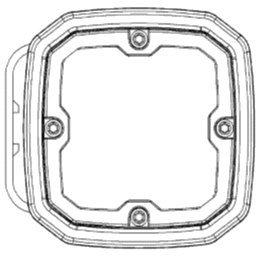
On September 15, 2025, the United States District Court for the Central District of California granted summary judgment of non-obviousness for patent owner Diode Dynamics, LLC (“Diode”). See Diode Dynamics, L.L.C v. 5DLight, Inc., No. 5:23-cv-02238-WLH-JPR, 2025 LX 395952 (C.D. Cal. Sep. 15, 2025). The accused infringer, 5DLight, Inc. d/b/a Lasfit (“Lasfit”) argued that Diode’s U.S. Patent No. D974,648 (“D’648”) was invalid under 35 U.S.C. § 103 as obvious in view of Chinese Design Patent No. CN304206980 S to Li (“CN ’980”) and U.S. Patent No. D735,909 to Ko (“Ko”). Images of these designs are shown in the table below.
| Asserted Primary Reference (“CN ’980”) | Asserted Secondary Reference (“Ko”) | D’648 Patent |
 |
 |
 |
 |
 |
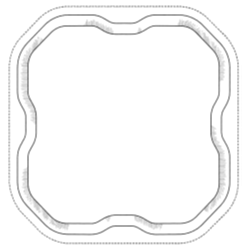 |
The California district court was not convinced by Lasfit’s invalidity theory. In reaching its conclusion, the court considered the Graham factors to assess (1) the scope and content of the prior art; (2) the differences between the prior art and the claims at issue; (3) the level of ordinary skill in the pertinent art; and (4) secondary considerations such as commercial success, long felt but unsolved needs, and failure of others (Graham v. John Deere Co., 383 U.S. 1, 17-18 (1966)). Under factor (1), the court found that CN ’980 and Ko were both analogous prior art. Under factor (2), the court found that the D’648 design diverged from both prior art references and cited LKQ for the proposition that “the more different the overall appearances of the primary and secondary references, the more work a patent challenger will likely need to do to establish a motivation to alter the primary prior art design in light of the secondary one and demonstrate obviousness without the aid of hindsight.” LKQ, 102 F.4th at 1300. Noting that Lasfit had offered “no record-supported reason why a designer would extract Ko’s vertical, flared geometry and merge it with CN ’980’s proportional bezel to produce D’648’s particular configuration,” the court held that Lasfit had not done the work necessary to establish a motivation to combine (without hindsight). Consistent with this, under factor (3), the court stated, “Lasfit provides no factual basis or industry rationale to suggest that a designer in 2017 would have been motivated to modify CN ’980 by incorporating Ko’s design features.” Finally, under factor (4), neither party identified any secondary considerations relevant to this combination.
Plus ça change, plus c’est la même chose. Three – USPTO Evidence.
In the run up to the two-year anniversary of LKQ v. GM, Professor Dennis Crouch helpfully posted two articles on his Patently-O blog about the case and obviousness rates. In Professor Crouch’s first post, on May 11, 2026, he reported that he had looked at a number of Hague design patent applications from the past 10 years and noted that LKQ has not led to any sustained increase in obviousness rejections of design patent applications under Section 103, with the current rate similar to where it was a decade ago (about 1% of design patent applications receive an obviousness rejection).