

Twelve years ago, a man walked into a bar. As the legend is known, the man spotted the iconic and instantly recognizable bottle of Jack Daniel’s Old No. 7 Tennessee Whiskey behind the bar and was struck by a flash of creative inspiration.[1] His idea? To create a dog toy using a similar shape as the Jack Daniel’s bottle and featuring the wording “Bad Spaniels,” “Old No. 2,” and “Tennessee carpet.” Within 48 hours, he had a draft design for a toy that would become not only one of his company’s best-selling products, but also the focus of a prolonged trademark law battle that would involve every level of the federal judiciary. This is the type of case that reminds trademark lawyers everywhere of why we love what we do.
On August 4, 2026, the Ninth Circuit Court of Appeals ruled that Jack Daniel’s Properties, Inc. (JDPI) was not entitled to an injunction for dilution by tarnishment under the Trademark Dilution Revision Act (TDRA) and remanded the case to the U.S. District Court for the District of Arizona for entry of judgment in favor of VIP Products, LLC (VIP), the manufacturer of the dog toy.[2] The relevant marks, as used in connection with the relevant goods, appear as follows:[3]
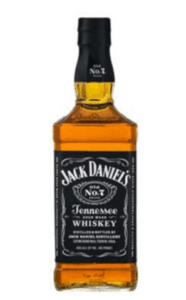 |
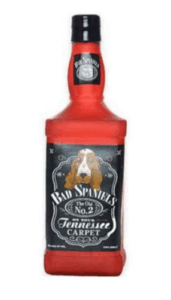 |
The Saga Begins
The dispute began in 2014, when JDPI demanded that VIP stop selling the toy. VIP sought a declaration that its Bad Spaniels toy did not infringe or dilute JDPI’s trademarks, and JDPI counterclaimed for trademark infringement and dilution by tarnishment pursuant to the TDRA.[4] In 2018, the District Court concluded that VIP’s Bad Spaniels toy infringed and tarnished JDPI’s trademarks and entered a permanent injunction in favor of JDPI.[5]
The Ninth Circuit reversed on the issue of dilution and vacated on the issue of infringement.[6] On remand, the District Court granted summary judgment to VIP on infringement and the dilution claim. JDPI appealed and the Ninth Circuit summarily affirmed.[7] The Supreme Court granted certiorari to consider the Court of Appeals’ rulings on both infringement and dilution.[8]
In characterizing its opinion as “narrow,” the Supreme Court indicated that its holdings on infringement and dilution “turn on whether the use of a mark is serving a source-designation function.”[9] With respect to infringement, the Supreme Court held that JDPI’s claim depended on the likelihood of consumer confusion and remanded to the District Court for further consideration.[10] With respect to dilution by tarnishment, the Supreme Court held that the TDRA’s non-commercial use exception did not shield parody or other commentary when the use of a mark is source-identifying.[11]
The case eventually returned to the District Court, which determined that JDPI had not shown a likelihood of consumer confusion and found in favor of VIP on the infringement issue. However, the District Court held that VIP was liable for dilution by tarnishment and entered a permanent injunction and final judgment in favor of JDPI.[12] VIP appealed and the matter returned to the Ninth Circuit for further consideration of the issue of dilution by tarnishment.
Trademark Tarnishment
Under the TDRA, “dilution by tarnishment” means “an association arising from the similarity between a mark or trade name and a famous mark that harms the reputation of the famous mark.”[13] The TDRA provides for injunctive relief in favor of the owner of a famous mark, “regardless of the presence or absence of actual or likely confusion, of competition, or of actual economic injury.”[14] However, the burden to establish the elements of fame, similarity, and likelihood of reputational harm, all lie with the plaintiff.
The Ninth Circuit determined that courts may only consider the dilutive effect of a junior mark that is similar to a corresponding famous mark in evaluating the likelihood of reputational harm to the senior mark. VIP conceded that its usage of “Bad Spaniels” and the toy bottle shape were similar to JDPI’s relevant marks, and the Court acknowledged that JDPI had proven its registered marks for the wording “Jack Daniel’s” and trade dress for the shape of its bottles are famous. Therefore, the Ninth Circuit’s opinion focused on whether VIP’s use of the wording “Bad Spaniels” and the toy’s trade dress were likely to tarnish the reputation of JDPI’s registrations for the wording “Jack Daniel’s” and the trade dress for its bottle shape.[15]
Reputational Harm
To support its arguments regarding reputational harm, JDPI introduced the expert testimony of Dr. Itamar Simonson during the District Court proceeding. Dr. Simonson utilized a methodology known as the Associated Network Model that measures how brands and ideas are represented in memory via the words, images, and associations that come to mind when people think about a particular brand. The District Court was persuaded by Dr. Simonson’s testimony and concluded that VIP’s use of the “Bad Spaniels” mark created a negative association with JDPI’s marks by associating whiskey with dog feces, and this association tarnished JDPI’s marks based on consumer psychology research that purported to establish that when food or beverage is associated with defecation, disgust is generated in the consumer’s mind with respect to that food or beverage.
In its opinion, the Ninth Circuit scrutinized the testimony of Dr. Simonson and found that it did not establish any harmful association with or otherwise damage the reputation of either of JDPI’s famous marks. The Court described VIP’s product as a “parodic dog toy not intended for human consumption,” and determined that “[t]here is no evidence in the record from which a court could reasonably infer that scatological references made on a dog toy have the same likelihood of generating disgust as identical references on a consumable product meant for humans might.”[16]
The Importance of Parodic Intent
The Ninth Circuit characterized VIP’s dog toy as an “obvious parody.”[17] Courts consider parody as part of the circumstances in determining whether a plaintiff has made out a claim for dilution. Moreover, the parodic intent behind the use of a similar mark impacts the likelihood that a famous mark may be harmed by association. “A parody must convey two simultaneous – and contradictory – messages: that it is the original, but also that it is not the original and is instead a parody.”[18] Where an allegedly diluting product creates a successful parody, the plaintiff bears an increased burden to demonstrate that its famous marks are likely to suffer reputational harm. In addition, a successful parody injects humor into the dilution analysis and factors in to whether a plaintiff has sustained any harm. Here, the Ninth Circuit found that the District Court had failed to consider the effect of VIP’s obvious parody on the likelihood of tarnishment, and this was a “critical misstep” in the District Court’s holding in favor of JDPI.[19]
Parodic intent cannot be discounted when evaluating the potential for dilution by tarnishment. Brand owners, and particularly those that own famous marks, must continue to police their marks and investigate any third-party usage of similar marks that may constitute infringement or dilution. However, the usage of a similar mark, particularly in a humorous fashion, does not always equal reputational harm.
Here, JDPI relied entirely on expert testimony in an attempt to prove harm. The use of expert testimony in a trademark proceeding should always be considered, particularly when consumer perception is key to the overall analysis. However, if a consumer is likely to perceive the use of a similar mark on non-competitive goods as a parody, the plaintiff’s burden to establish reputational harm increases significantly. For this reason, it is crucial for brand owners to recognize that parodic intent may affect their ability to prevail on a claim of dilution by tarnishment under the TDRA. It is equally crucial for creators of parodic goods to avoid harming the reputation of a famous mark and to be mindful of the established intellectual property rights of others.
This case shows how entrepreneurial ingenuity and competitive spirit continue to drive free enterprise, especially when used in a lighthearted way. It also demonstrates that inspiration may strike anywhere at any time, as evidenced by that burst of creativity in a bar 12 years ago. But perhaps most importantly, this case reinforces a proposition that most trademark lawyers already know: Trademarks Are Fun.
[1] Nina Totenberg, Jack Daniel’s Tells Supreme Court Its Brand Is Harmed by Dog Toy Bad Spaniels, NPR (March 22, 2023), https://www.npr.org/2023/03/
22/1162692739/supreme-court-jack-daniels.
[2]VIP Products, LLC v. Jack Daniel’s Properties, Inc., No. 25-2027 (9th Cir. Aug. 4, 2026).
[3] Photos courtesy of the U.S. Supreme Court in Jack Daniel’s Props. v. VIP Prods. LLC, 599 U.S. 140 (2023).
[4] Pub. L. No. 109-312, 120 Stat. 1730 (2006).
[5] VIP Prods., LLC v. Jack Daniel’s Props., 291 F.Supp.3d 891 (D. Ariz. 2018).
[6] See VIP Prods., LLC v. Jack Daniel’s Props., Inc., 953 F.3d 1170, 1176 (9th Circ. 2020).
[7] VIP Prods. LLC v. Jack Daniel’s Props., Inc., No. 21-16969, 2022 WL 1654040 (9th Cir. Mar. 18, 2022).
[8] Jack Daniel’s Props. V. VIP Prods. LLC, 599 U.S. 140 (2023).
[9] Id. at 163.
[10] Id. at 161.
[11] Id. at 163.
[12] VIP Products LLC v. Jack Daniel’s Properties Inc., 2025 WL 275909 (D. Ariz. Jan. 23, 2025).
[13] 15 U.S.C. § 1125(c)(2)(C).
[14] 15 U.S.C. § 1125(c)(1).
[15] The Ninth Circuit also determined that the District Court had failed to delineate between all of JDPI’s marks and to make individual findings of fame regarding each mark, and this “erroneously lowered JDPI’s burden of proof.” VIP Products, LLC v. Jack Daniel’s Properties, Inc., No. 25-2027 at *16 (9th Cir. Aug. 4, 2026). Because the District Court did not conduct any separate analysis regarding JDPI’s “Old No. 7” mark, the Court determined that JDPI could not base a tarnishment claim on “Old No. 7.”
[16] VIP Products, LLC v. Jack Daniel’s Properties, Inc., No. 25-2027 at *23-24 (9th Cir. Aug. 4, 2026).
[17] Id. at *24.
[18] Cliff Notes, Inc. v. Bantam Doubleday Dell Publishing Group, Inc., 886 F.2d 490, 494 (2d Cir. 1989).
[19] VIP Products, LLC v. Jack Daniel’s Properties, Inc., No. 25-2027 at *27 (9th Cir. Aug. 4, 2026).